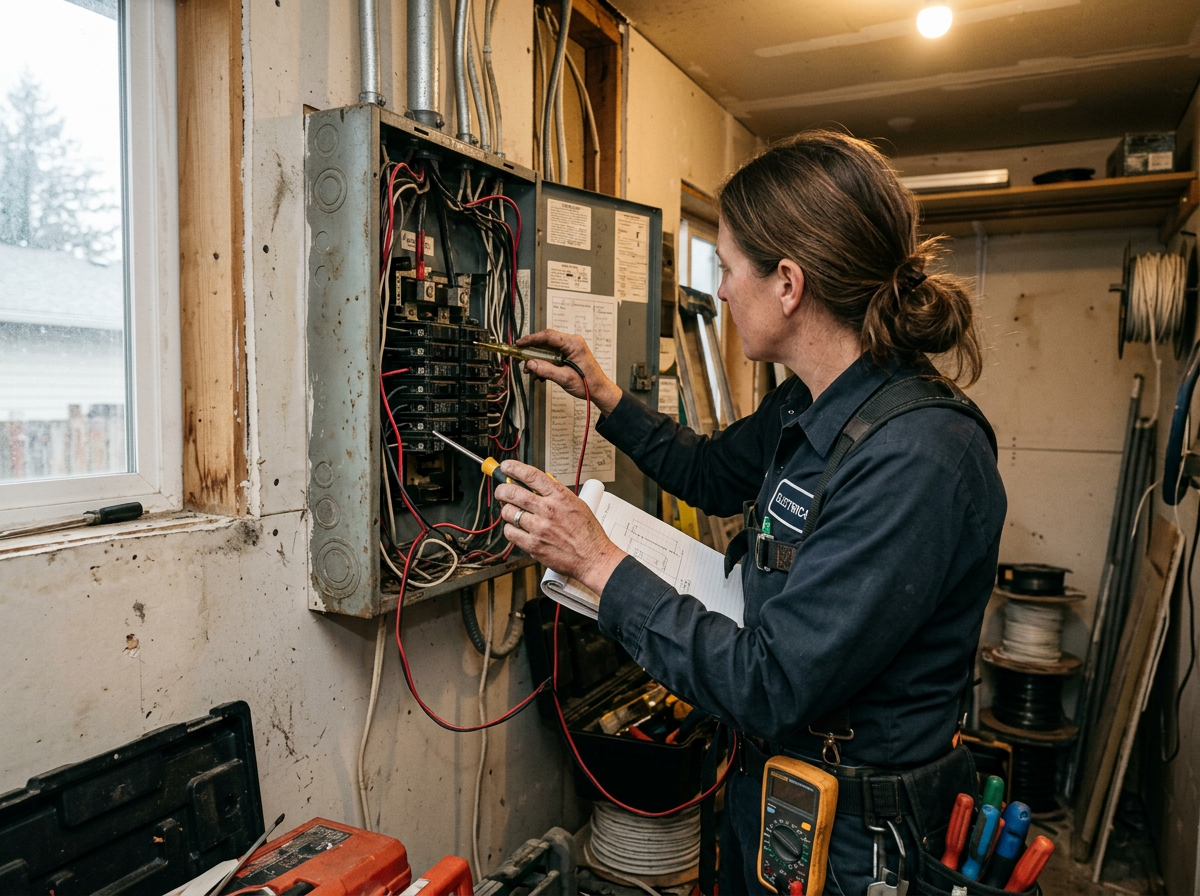
The Country Club neighborhood sits southwest of the city centre around the Corvallis Country Club, and most of it was built between the 1950s and the 1970s. Mid-century ranches and split levels dominate, with newer construction filling in later. Electrically that means 100 amp services that are now working harder than they were designed to, aluminum branch circuits in the mid 1960s to mid 1970s houses, and load centers using breakers that suppliers have long since discontinued.
Original panels in these homes tend to be in awkward places: basements, utility closets, side yards that have since grown in with forty years of landscaping. Access shapes the job. Relocating the panel to an exterior wall during an upgrade is often the better long term answer, since it makes the meter base, the disconnect and future work simpler, and it gets the equipment out of a finished space. We work that out at the quote stage.
Lots here run large, so detached garages, shops and later ADUs are common and many were fed years ago with whatever cable was convenient. Before adding a charger, a compressor or a shop subpanel we check what is actually in the ground, whether the feeder carries an equipment grounding conductor, and whether the run length calls for upsizing to keep voltage drop in check. Wet Willamette Valley winters do the rest, working on meter bases and outdoor disconnects that have never had a stainless fastener in them.
Around Country Club
We regularly work near:
- 📍Corvallis Country Club
- 📍Bruce Starker Arts Park
- 📍SW Country Club Drive
- 📍SW 45th Street
- 📍Jefferson Elementary School
- 📍Marys River
Electrician Corvallis in Country Club — Local Notes
- •Homes from the mid 1960s to mid 1970s here commonly contain aluminum branch wiring that needs AlumiConn or CO/ALR terminations at every device before extra load goes on those circuits.
- •Legacy load centers of this era often take breakers that are no longer manufactured, and forcing an unlisted breaker into the bus is a real fire risk, so the panel gets replaced rather than patched.
- •Mature landscaping and interior panel locations make access the main scheduling variable, and relocating the panel to an exterior wall is frequently worth doing during an upgrade.
- •Large lots mean long underground runs to garages, shops and ADUs, so feeders get sized for the actual distance and installed in conduit given how long the ground stays saturated here.