South Corvallis runs from roughly Western Boulevard down along 3rd Street toward the confluence of the Marys and Willamette rivers. The housing is a genuine mix. Pre-war cottages and bungalows on the older grid sit near mid-century ranches and pockets of newer infill, and the electrical picture changes house to house. Original knob and tube and 60 amp services are still in service in the oldest stock, while the postwar homes carry 100 amp panels and, in places, aluminum branch circuits from the late 1960s and early 1970s.
Water is the defining local condition. This is the low ground of the city, close to two rivers, and the soil holds moisture from October through spring. That shows up as corrosion at meter bases and exterior disconnects, as water in outdoor boxes tripping GFCIs, and as trenches for underground feeders that fill faster than they can be backfilled. We schedule underground work toward the drier months where the job allows, and we specify conduit and wet location rated conductors rather than direct burial cable pushed past its limits.
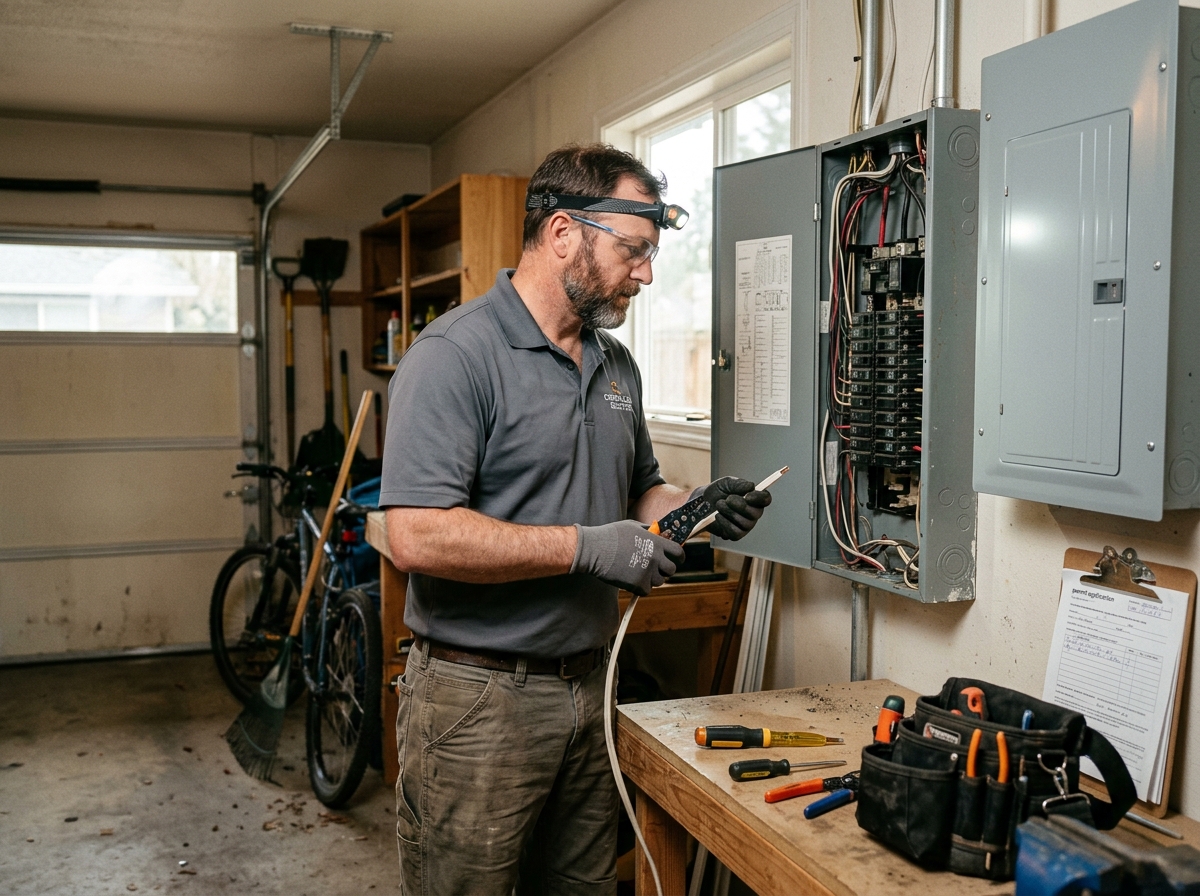
Detached garages, workshops and backyard ADUs are common here, and a lot of them were fed years ago with whatever cable was on hand. We check the existing feeder for size, grounding and condition before adding anything to it. On a run of any length the voltage drop calculation matters more than people expect, particularly once a welder, a compressor or a Level 2 charger goes in at the far end.
Around South Corvallis
We regularly work near:
- 📍Avery Park and Natural Area
- 📍Willamette River
- 📍Marys River
- 📍SW Western Boulevard
- 📍Lincoln Elementary School
- 📍South Corvallis Food Bank
Electrician Corvallis in South Corvallis — Local Notes
- •Pre-1940 houses on the older grid near 3rd Street still carry cloth insulated conductors that turn brittle in the damp air near the rivers, so any circuit being extended needs replacing rather than splicing.
- •Low ground and a high winter water table mean exterior disconnects and EV charger receptacles need elevated, weather rated enclosures rather than surface mounting at grade.
- •Underground feeders to garages and ADUs should be run in conduit with wet location rated conductors, since trenches on this side of town hold water for months.
- •Narrow side yard access on the older lots along Western Boulevard makes panel and meter base replacement a staging problem, so equipment routing gets planned before the quote.